Every car's paint picks up small imperfections over time: fine swirl marks from washing, light scratches from brushing past a bush or a car wash brush, and a duller, hazier look from sun exposure and oxidation. Paint correction is the process of machine polishing the clear coat to remove those imperfections and bring back a clear, glassy finish. Here is what actually happens, and what a realistic result looks like.
What paint correction actually does
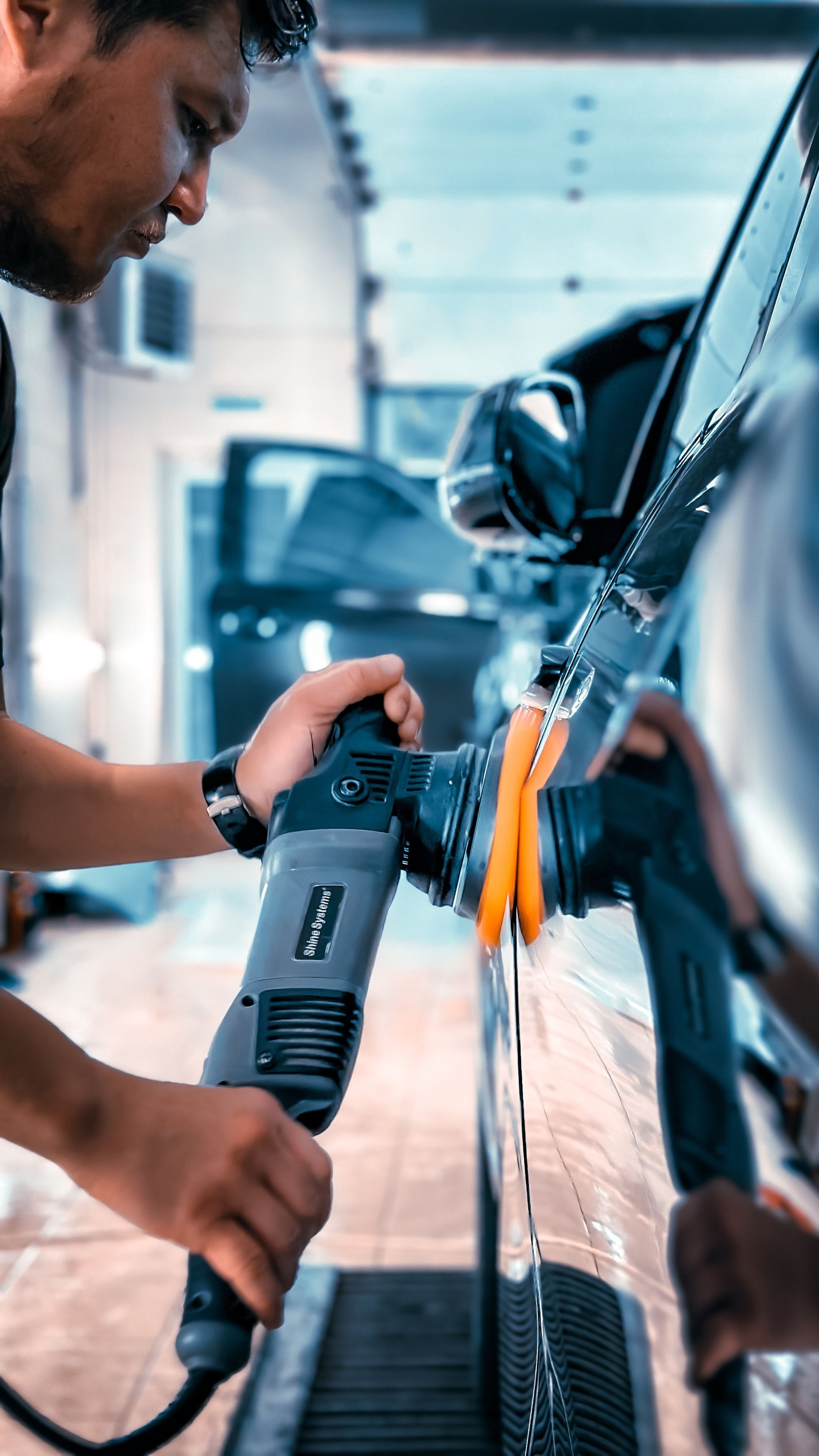
Paint correction uses a dual-action or rotary polisher with an abrasive polish to level out the microscopic peaks and valleys left in the clear coat by scratching and swirling. Once the surface is flat and even again, light reflects off it cleanly instead of scattering in every direction, which is what creates that deep, glassy look. It is a mechanical process, not a coating or a filler, so the result comes from actually removing the damaged layer of clear coat rather than covering it up.
Swirl marks vs. deeper scratches: what can be fixed
Swirl marks are the most common complaint, and usually the easiest to fix. They are a web of very fine, shallow scratches that sit entirely within the clear coat, often from washing with a dirty towel, an automatic car wash, or wiping dust off a dry panel. A single or two-stage polish typically removes them completely.
Deeper scratches are a different story. If a scratch is shallow enough that a fingernail doesn't catch on it, there is a good chance polishing can level the surrounding paint and make it far less visible, sometimes gone entirely. If a scratch has cut through the clear coat into the base color coat, polishing can soften how visible it is but generally cannot make it disappear completely, since there is no clear coat left to level in that spot. Being upfront about that distinction before starting is part of doing the job honestly.
The polishing stages, from light to heavy correction
Paint correction is usually described in stages. A one-stage polish uses a single finishing polish to bring back gloss and remove light swirling, the quickest option, and it works well on paint that is already in decent shape. A two- or three-stage correction starts with a cutting compound to remove heavier swirling, oxidation, or scratching, then works down through progressively finer polishes to refine the finish and maximize clarity. More stages mean more time spent and more clear coat removed, so the right stage count depends on how much correction the paint actually needs.
When correction alone is enough, and when to add protection
For a lot of cars, a proper polish is the whole job: the swirls are gone, the paint looks deep and glassy, and that's the end of it. But paint correction resets the clock on your clear coat, it doesn't stop the next wash or the next dusty parking lot from starting the cycle again. That is why it pairs so well with a ceramic coating or paint protection film afterward. A ceramic coating adds a slick, hydrophobic layer that makes the surface easier to keep clean and more resistant to new swirling. Paint protection film goes a step further on high-impact panels like the hood and front bumper, physically absorbing rock chips and abrasion instead of your fresh paint taking the hit. Either way, protecting a freshly corrected finish is what makes the result last.
Not sure whether your car needs a light polish or a full multi-stage correction? Send us a few photos or stop by, and we will give you an honest read on what your paint needs. You can see our paint correction service or get a free quote below.